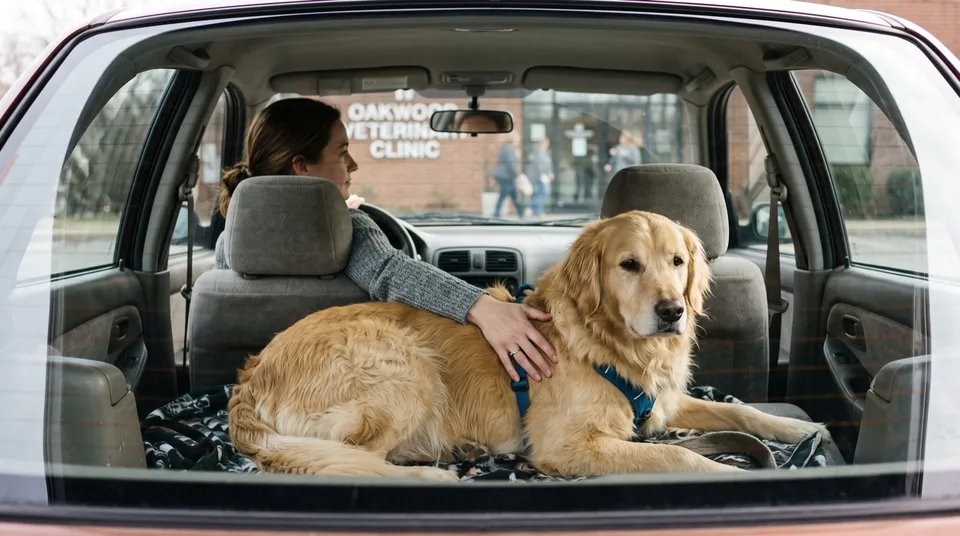
If your dog struggles at the vet — growling, snapping, shutting down, or lunging — it’s worth reframing what’s actually happening: this is almost always fear, not a temperament problem. Your dog isn’t being difficult. They’re trying to survive an unfamiliar building full of strange smells, restrictive handling, and no way to opt out, and that fear response deserves a real management plan, not just gritted teeth on both ends of the leash.
Call ahead about logistics
Clinics deal with fearful and reactive dogs constantly, and most are genuinely glad to help if you ask specifically:
- Ask for the quietest appointment slot — often first thing in the morning or right after a lunch lull, when the lobby is least likely to have other animals in it.
- Ask if you can wait in the car instead of the lobby, with staff calling or texting you when the room is ready. This alone removes a huge amount of the exposure a busy waiting room creates.
- Ask about a side or back entrance, if the clinic has one. Some do, specifically for cases like this, and it’s rarely offered proactively — you usually have to ask.
None of these requests are unusual to a clinic that sees reactive and fearful dogs regularly. Asking specifically, ahead of time, gets you a much better outcome than hoping the front desk figures it out when you arrive.
Happy visits
A “happy visit” is a trip to the clinic on a calm day, purely for treats, friendly staff attention, and no procedures at all — the goal is building a positive association with the building itself, so a vet visit doesn’t always predict something unpleasant. Ask your clinic if you can stop by briefly, treat pouch in hand, just to let your dog sniff the lobby, get some praise from staff, and leave. A few of these, spaced out before you actually need a real appointment, can meaningfully shift how your dog feels about walking through that door. This kind of low-stress handling approach is exactly what the AVSAB Position Statement on Humane Dog Training recommends for reducing fear during veterinary and handling situations.
Muzzle training before you need it
This is one of the more genuinely useful tools specifically for vet visits: many vets recommend having a reactive dog comfortable wearing a basket muzzle well before it’s actually needed for a procedure. Introducing a muzzle cold, in the middle of an already stressful visit, adds a whole additional layer of novel stress on top of everything else happening. See the muzzle training guide for the full conditioning process — the goal is a dog who’s already relaxed wearing one by the time a vet actually needs it, not one encountering it for the first time mid-appointment.
In-visit tools — and a real stress signal to recognize
High-value treats and something like a lick mat or a small amount of frozen food smeared on a flat surface can help redirect focus and add a positive association during the visit itself. But it’s worth knowing: a dog who refuses treats entirely, even ones they normally love, is showing a real stress signal, not being picky. This mirrors the same “refusing treats” signal covered in the threshold-distance guide — a stressed nervous system deprioritizes eating. Don’t push past a dog who won’t eat at the vet; treat it as useful information about how overwhelmed they currently are, not a failed bribe attempt.
A conversation worth having: pre-visit anxiety medication
For genuinely difficult cases, some vets prescribe anxiety medication specifically to be given before an appointment — this is a legitimate, established option worth raising directly with your vet if visits are consistently very stressful despite the logistics and prep above. This isn’t something to self-diagnose or dose from a blog post; it’s a conversation to have with your vet about your specific dog, and many vets bring it up themselves once they see a pattern of significant visit-related distress.
A longer-term option: cooperative care
Cooperative care training — teaching a dog to voluntarily participate in handling, such as offering a chin rest for an exam or choosing to hold still for a nail trim — is a deeper, longer-term approach worth knowing about even if it’s beyond the scope of a single post to teach in full. The core idea is giving the dog real choice and control over when handling starts, which tends to reduce the fear response considerably over time compared to handling that’s simply done to the dog. If vet visits are a recurring significant stressor, cooperative care is worth researching further or discussing with a trainer as a longer-term investment, separate from the more immediate logistics and prep covered above.
When to bring in a professional
If your dog’s fear or reactivity at the vet is severe, if there’s ever been a bite or bite attempt during handling, or if none of the above is making a meaningful difference, that’s worth raising with both your vet and a certified force-free trainer — vet-visit stress this significant often benefits from a coordinated plan between the two rather than either one addressing it alone.
Related reading
For the broader framework this fits into, see the foundational reactivity guide. If pre-visit anxiety medication comes up with your vet, our honest look at calming aids and anxiety wraps covers what has real evidence behind it and what doesn’t.