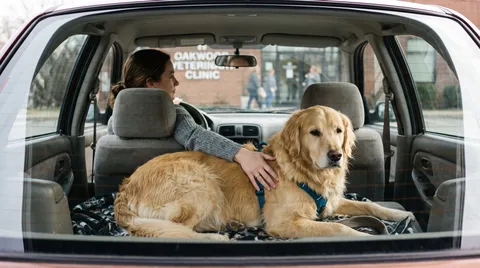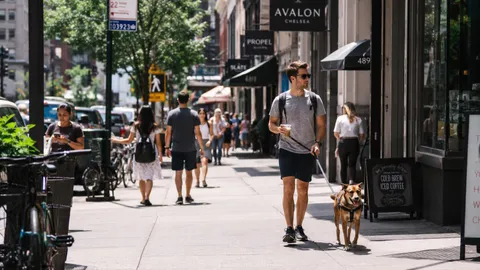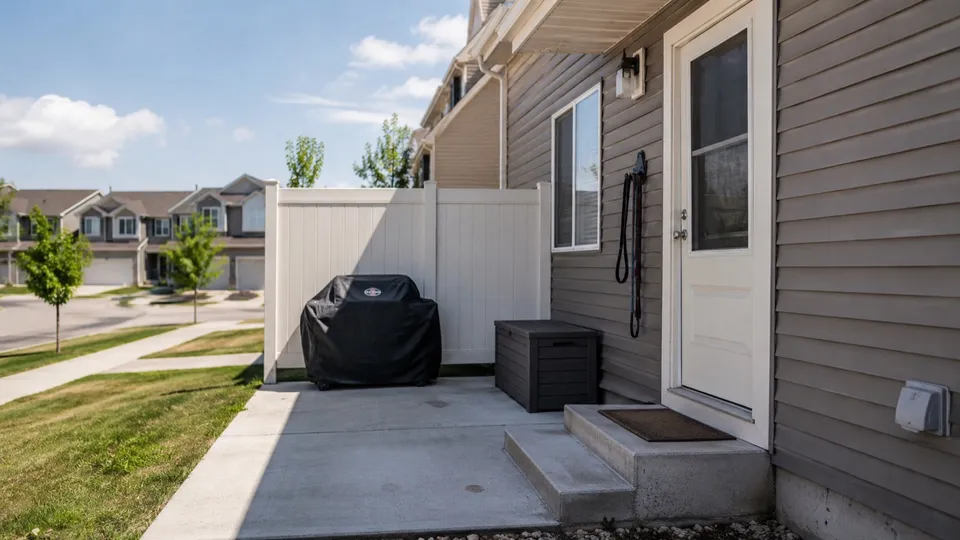
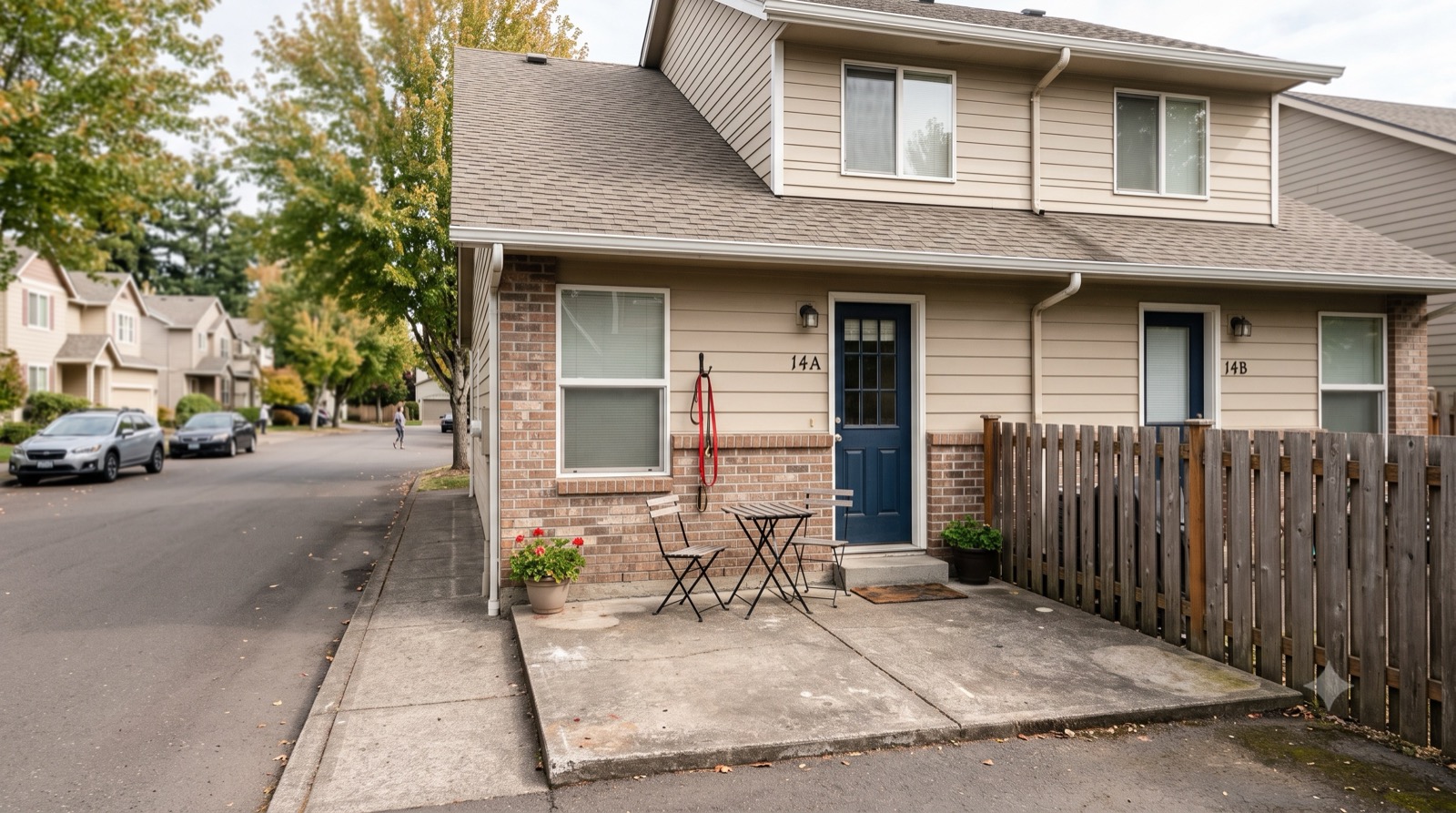
Most reactive dog training advice quietly assumes you have a fenced yard to practice in — somewhere private, with a gate, where you control who and what shows up. If you don’t have that, whether you’re in a house with no fence or an apartment with no outdoor space at all, the training itself doesn’t change, but finding somewhere to actually do the reps takes real, deliberate effort. Here’s how to build that space.
Why this matters more than it seems like it should
Reactive dog training runs on controlled repetitions — practice sessions where you decide the distance, the duration, and what your dog is exposed to. A private yard makes that almost automatic: you open the back door and you have a controlled space. Without one, every rep has to be planned and scouted in advance, which is genuinely more work, not a smaller version of the same task. That extra logistical load is real, and it’s worth naming upfront rather than pretending the workaround is just as easy.
This post is a companion to apartment training, which focuses on hallway and building-specific management. This one is about finding and using outdoor practice space — relevant whether you live in an apartment or a house with no fence.
Substitute private spaces
A handful of options can stand in for a private yard, roughly in order of how much control they give you:
- Rental spaces (like Sniffspot). These are privately owned, usually fenced, outdoor spaces that owners rent out by the hour specifically for dog training and exercise. They’re the closest substitute to an actual private yard — you typically get the whole space to yourself for your booked window, with no surprise dogs or people.
- Empty school parking lots on weekends. Large, open, flat, and predictably empty outside of school hours — good sightlines and plenty of room to control distance.
- Business parking lots after hours. Similar logic — check that you’re not trespassing on posted private property, but many quiet commercial lots work well once the business is closed.
- Industrial parks on weekends. Often large, open, and nearly empty on Saturdays and Sundays, with wide sightlines and multiple exit routes.
The common thread across all of these isn’t prettiness or convenience — it’s control over distance and a clear way out if something unexpected shows up.
How to scout a location before you commit to it
Don’t treat the first visit as a training session — treat it as reconnaissance:
- Check sightlines. Can you see triggers — other dogs, people, traffic — approaching from a real distance, or are there blind corners, tall hedges, or building edges that could produce a surprise encounter? Long, open sightlines are what make a location usable for threshold work.
- Check for other dogs or people who might show up unexpectedly. Walk or drive the area at the day and time you actually plan to train, not just once at a random hour — a lot that’s empty on a Tuesday morning might be full of dog walkers on a Saturday.
- Identify an exit route before you need one. Know which direction you’ll move, and where, if a trigger appears sooner or closer than expected. Decide this before you arrive with your dog, not in the moment.
If a location fails any of these three checks, it’s worth continuing to look rather than trying to make a bad location work through extra caution alone.
Making public parks work when rentals aren’t available
Rental spaces and empty lots aren’t accessible everywhere, and public parks are sometimes the realistic option. A few adjustments make them more workable:
- Go at off-peak times — early morning or late evening, when foot and dog traffic is lowest.
- Use the edges of large open fields rather than trails. Trails are narrow and create sudden, close encounters around bends; the edge of an open field gives you room to see things coming and move away before they’re close.
- Use parked cars, hedges, or other visual barriers deliberately. Positioning your dog on the far side of a natural barrier from a path or entrance can reduce how much your dog notices, effectively substituting for distance you don’t have.
A long line: the gear that substitutes for yard space
A long line — typically 15 to 30 feet — is the single most useful piece of gear for training without a private yard. It gives your dog much more freedom to move, sniff, and settle than a standard six-foot leash, while still keeping you in physical control if something unexpected happens. See the long-line buying guide for length, material, and sizing specifics.
A few practical notes on using one:
- Use a wide, flat line that’s easy to gather quickly — a thin cord is harder to manage and can cause rope burn if it runs through your hand fast.
- Practice gathering and paying out line smoothly before you use it near a real trigger — fumbling with a tangled long line at the wrong moment defeats the purpose.
- A long line pairs naturally with a front-clip or dual-clip harness — the harness gives you control if your dog does react, and the long line gives them room to move and decompress in the meantime.
Set realistic expectations
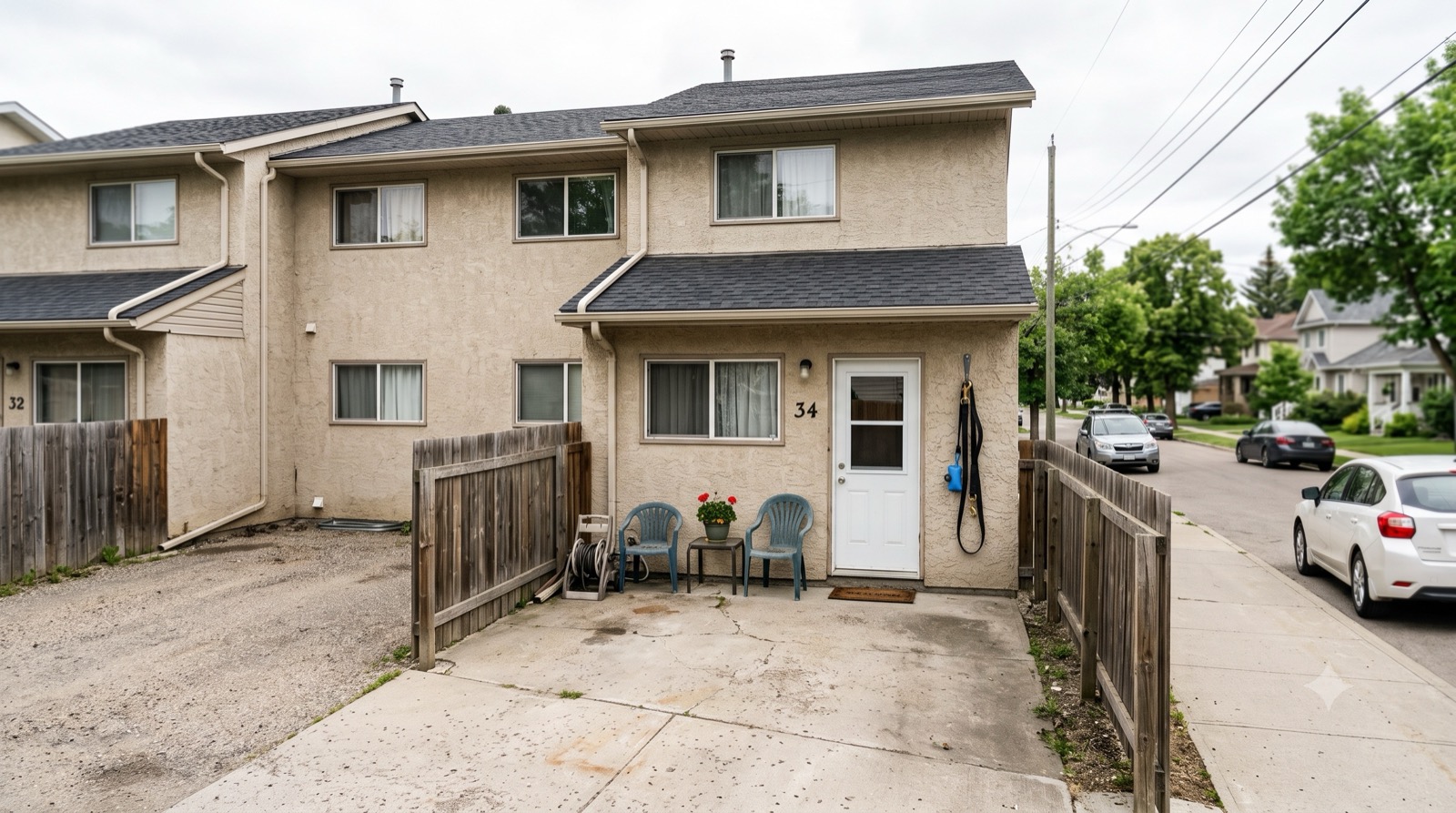
This genuinely will feel like more work than training in your own fenced yard would. Scouting locations, timing visits around when a lot is empty, driving somewhere instead of stepping out your back door — none of that is a sign you’re doing something wrong or that your dog is a harder case than others. It’s an accurate reflection of the extra logistics involved when you don’t have private outdoor space, and building that logistics habit is itself part of the work.
When to bring in a professional
If you’re consistently unable to find a workable practice space, if your dog’s reactivity is intensifying despite consistent management, or if you feel unsafe during outdoor sessions, that’s the point to bring in a certified force-free trainer in person — many trainers can also help identify local rental spaces or quiet locations you might not know about in your specific area.
Related reading
Once you’ve found a workable space, the next skill to build there is finding your dog’s threshold distance — the core method behind every session you’ll run in it. For pairing a quiet space with recovery time rather than training, see decompression time instead.