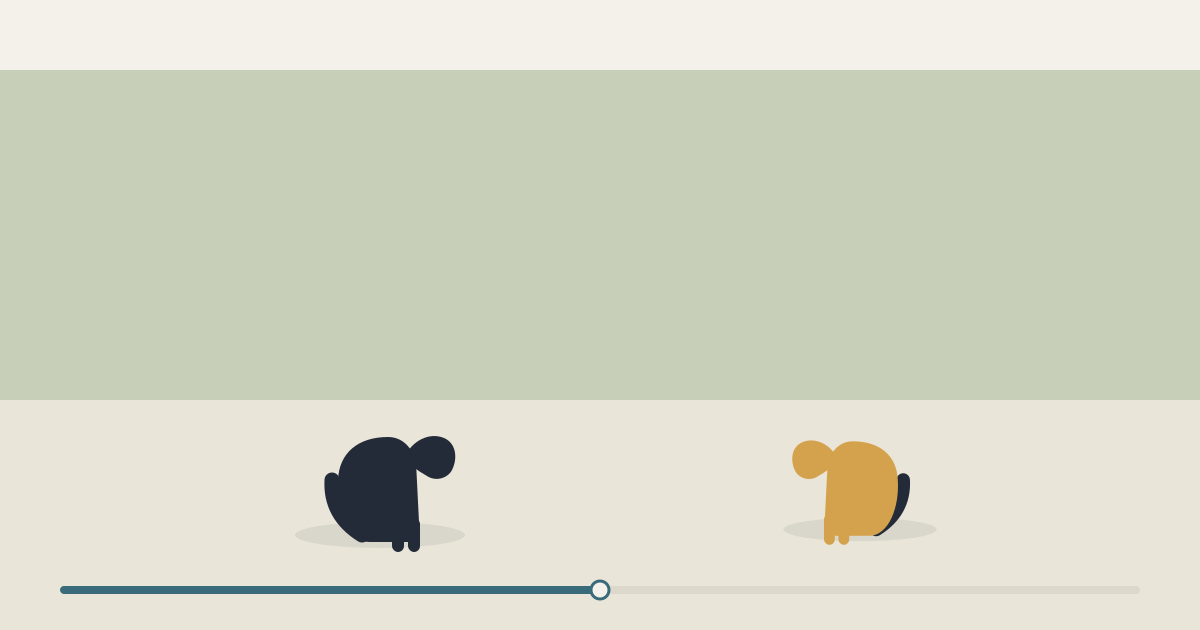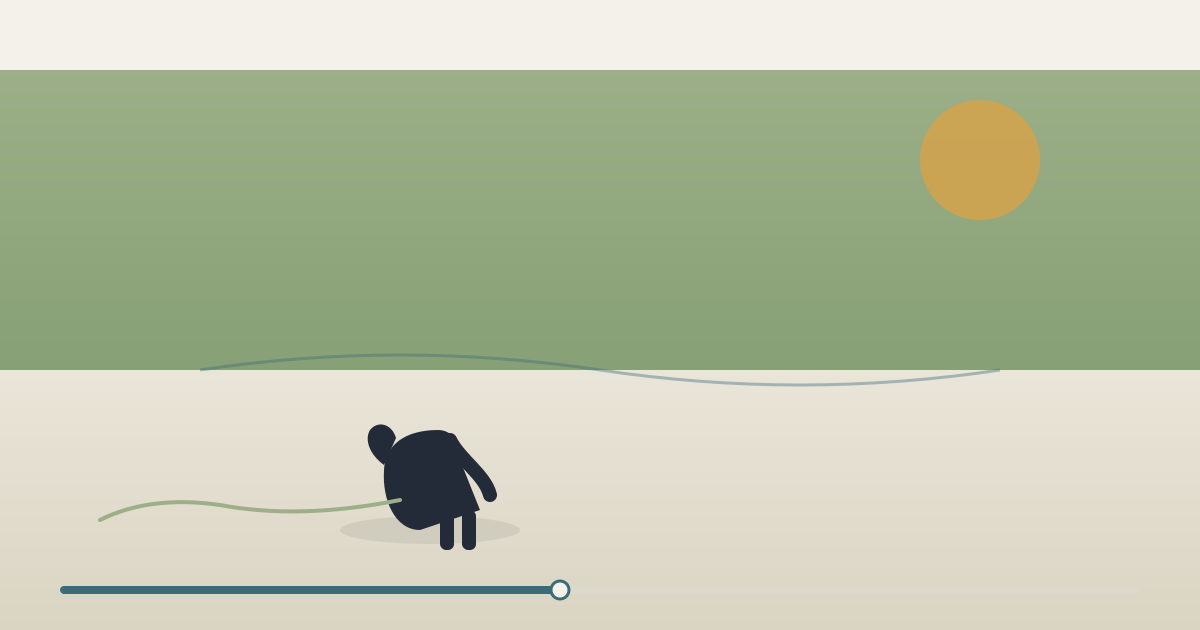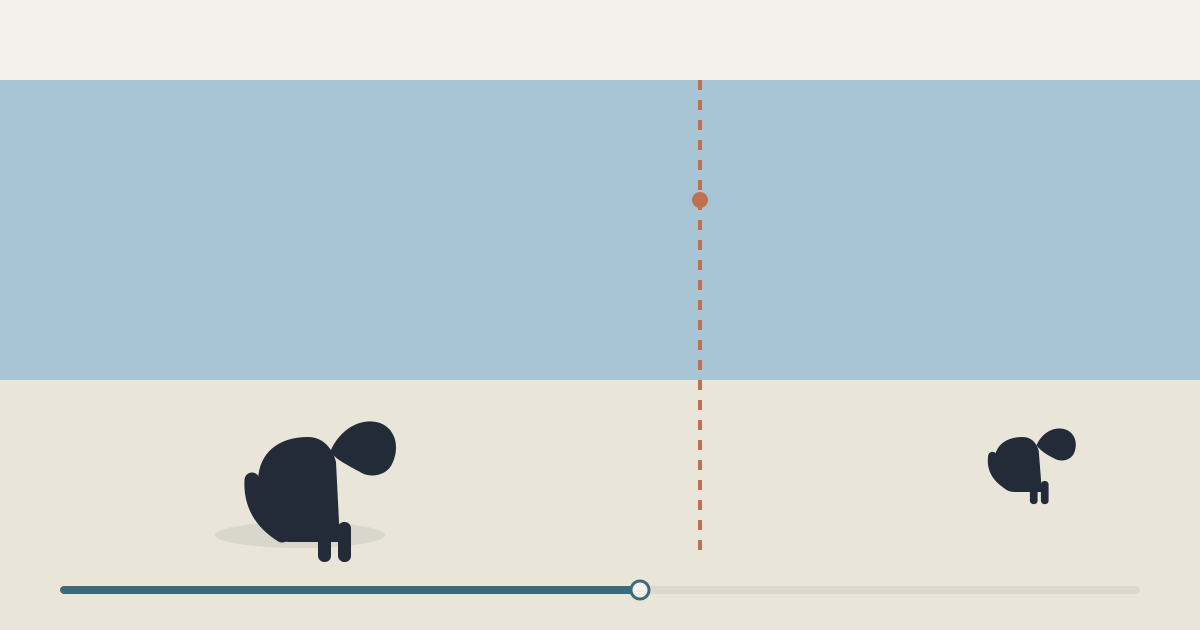
Threshold distance is the distance from a trigger — another dog, a stranger, a bike — at which your dog notices it but can still think: take a treat, respond to their name, make a choice. Get closer than that, and your dog crosses into “over threshold,” where they can only react. Almost every reactive dog training technique depends on working at or just outside this distance, which is why finding it is the first real skill to build.
A way to think about it
Imagine trying to read a difficult book while someone across the room is talking quietly. You can still read — it takes a bit more focus, but you’re managing both things at once. Now imagine that same person is standing right next to you, talking directly at you. You can’t read anymore. You’re not choosing to stop; your brain has simply run out of room to do both.
Your dog’s threshold works the same way. Below it, they can notice a trigger and still “read the book” — take a treat, hear you, make a decision. Past it, there’s no room left. The barking, lunging, or freezing you see isn’t defiance or a training failure in that moment — it’s what’s left once thinking is no longer available. This is exactly why more repetitions of “no” or a leash correction rarely help once a dog is already over threshold: you’re not talking to a part of the brain that’s currently in charge.
The barking, lunging, or freezing you see isn't defiance or a training failure in that moment — it's what's left once thinking is no longer available.
Step-by-step: finding it
You’ll need a helper with a calm, neutral dog (or another version of your dog’s specific trigger, if it’s not dogs), a stash of high-value treats, and more space than you think you’ll need.
- Start much farther away than feels necessary. For many dogs, this is 50 to 100-plus feet — far enough that it feels almost silly. That’s the right place to start. It’s much easier to close distance gradually than to recover from starting too close.
- Have your helper hold their dog still, or walk slowly across your field of view, at that distance. Watch your dog’s response closely.
- Look for noticing-but-coping. Your dog should be able to glance at the trigger, then look back at you, take a treat, and respond to a cue like their name. Ears up, a soft or neutral body, willingness to eat — these are all signs your dog still has room to think.
- Mark and reward that calm awareness. The instant your dog notices the trigger and stays relaxed, mark it (“yes!”) and reward generously. You’re not waiting for your dog to ignore the trigger completely — noticing it and staying okay is the behavior you want.
- Hold that distance for several reps across more than one session before moving closer. Don’t rush this — a dog who copes once at a distance hasn’t necessarily built a reliable pattern yet.
- Close the distance in small increments — a few feet at a time, not by half. After several consistently relaxed reps, move a little closer and repeat the process. If your dog struggles at the new distance, that’s information, not a setback: back up to the last distance that worked and stay there longer.
Signs you’re too close
These are the signals that you’ve crossed into over-threshold territory, and they’re worth learning to recognize early, not after a full reaction:
- Fixating — a hard, locked stare at the trigger that doesn’t break even when you say your dog’s name
- Refusing treats — even food your dog normally can’t resist gets ignored; this is one of the clearest and fastest signals available, because a stressed nervous system deprioritizes eating, a pattern the AVSAB Position Statement on Humane Dog Training specifically flags as a sign to stop and reassess rather than push forward
- Stiffening — a suddenly rigid body, tail, or stance
- Inability to look away — you call your dog’s name and get no response, not because they’re ignoring you but because they genuinely can’t disengage
Any one of these means back up distance immediately — don’t wait to see if it resolves on its own.
The real threshold is the first sign, not the reaction
It’s tempting to treat “threshold” as the point right before your dog fully explodes, but the more useful definition is much earlier: the very first flicker of stress — the first stiffen, the first hesitation on a treat, the first extra-long look at the trigger. That first sign is the actual threshold. Everything after it, up to and including the full reaction, is your dog already over the line, just at different volumes.
Training at the first sign, not the full reaction, is what makes threshold work actually effective. If you wait for the obvious meltdown to know you’re too close, you’ve been training your dog to rehearse being over threshold the entire time you were “getting close enough to see.”
Threshold isn’t fixed — it moves
A distance that worked yesterday isn’t guaranteed to work today, and that’s normal, not a sign your training isn’t sticking. Threshold shifts based on:
- Trigger intensity. A calm, ignoring dog at 30 feet is a different trigger than a barking, lunging dog at 30 feet — your threshold distance for the second is going to be much larger.
- Your dog’s state that day. A dog who’s already stressed — from a vet visit earlier, poor sleep, a loud thunderstorm — starts the walk with less capacity in reserve, so their threshold distance will often be larger than usual.
- Duration of exposure. Even a distance your dog can comfortably hold for thirty seconds can become too much if the trigger lingers for five minutes. Threshold isn’t just about space — time at that distance matters too, so don’t assume a “safe” distance stays safe indefinitely.
Reading these day-to-day shifts, rather than training to a fixed number of feet, is what separates threshold work that actually progresses from threshold work that stalls out.
Why this is the foundational skill
Nearly everything else on this site assumes you can find and work at your dog’s threshold. It’s the mechanism behind the hallway protocol in apartment training, and it’s the reason distance-based advice under-serves dogs whose reactivity is frustration-based rather than fear-based — for those dogs, the goal shifts from pure distance work to pairing distance with impulse control, but you still need to know where your dog’s threshold sits to set that training up correctly.
When to bring in a professional
If you can’t find a distance where your dog copes even at 100-plus feet, if your dog’s threshold seems to be shrinking over time despite consistent management, or if reading your dog’s stress signals in the moment feels unclear or unsafe, that’s the point to bring in a certified force-free trainer or veterinary behaviorist in person. Threshold work is foundational, but it’s also easy to get subtly wrong without a second set of eyes on your specific dog’s body language.
Related reading
For the bigger picture of how threshold fits into reactivity training overall, start with the complete reactivity guide.