If you’re hoping to socialize an adult reactive dog, it’s worth being honest about the goal upfront: for most reactive dogs, the aim isn’t turning them into a social butterfly who loves every dog and stranger they meet. It’s building calm coexistence — the ability to be around triggers without a stress reaction. That’s a more achievable goal than full resocialization, and it’s also a more honest one, which makes it easier to actually reach.
Why forced exposure backfires
It’s tempting to think repeated exposure alone will “cure” a dog of their reactivity — put them near enough dogs or strangers often enough, and they’ll get used to it. In practice, forced exposure with no escape route (sometimes called flooding) tends to make fear worse, not better. A dog held near a trigger they can’t get away from doesn’t learn the trigger is safe; they learn that stress doesn’t end, which deepens the fear rather than resolving it — flooding is specifically discouraged in the AVSAB Position Statement on Humane Dog Training for exactly this reason. Counter-conditioning and controlled positive exposure — where the dog has room to cope and the experience is genuinely engineered to go well — work far more reliably than forcing an interaction and hoping for the best.
Small wins add up more than big exposures
Progress in socialization is incremental, not a single breakthrough moment. A short, calm, well-managed exposure that ends before anything goes wrong is worth more than an ambitious outing that pushes too far and ends in a reaction. Consistency across many small, successful reps builds a much more durable change than occasional big attempts at exposure — treat the small wins as the actual progress, not as a lesser version of some bigger goal you haven’t gotten to yet.
A practical starting structure
The same threshold-based approach that underlies most training on this site applies directly to socialization:
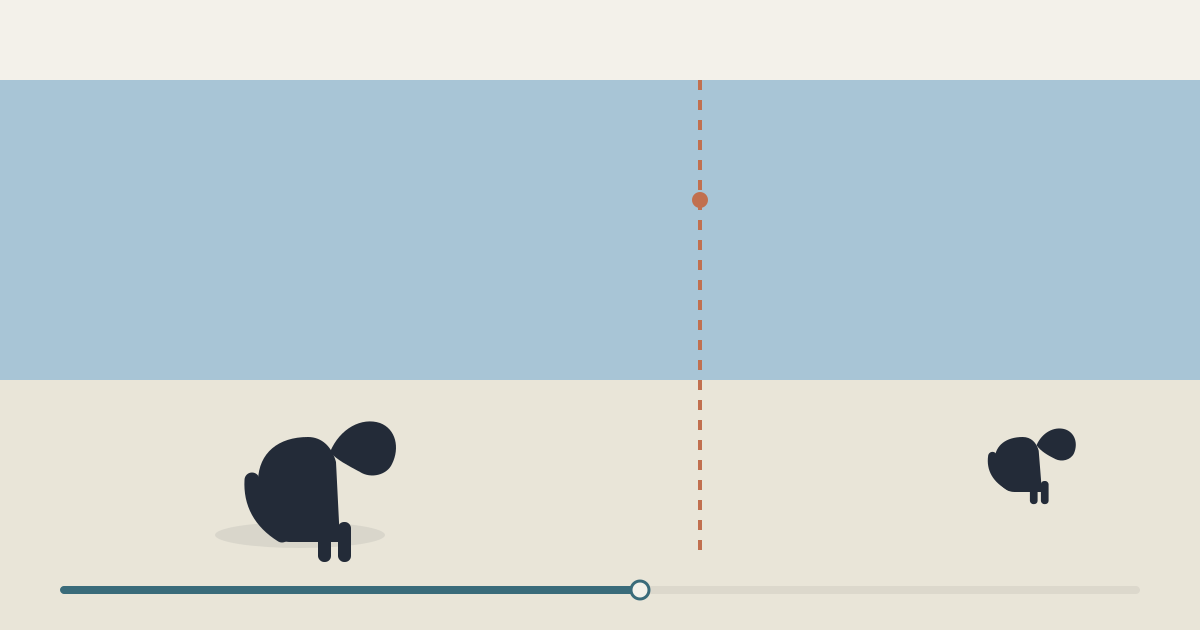
- Start at a distance your dog can handle. See finding your dog’s threshold distance for the full method — the same principle of working where your dog can notice a trigger and still think applies here.
- Keep sessions short. A few well-managed minutes beats a long outing that runs past the point your dog can stay calm.
- End on a calm note, on purpose. Wrap up the session while things are still going well, rather than continuing until something goes wrong. Ending well reinforces the whole experience as a success, even if the session was brief.
Should you still try to make dog friends?
For many reactive dogs — especially those whose reactivity is frustration-based rather than fear-based — controlled meetups with known, compatible dogs can still be genuinely valuable, and worth pursuing rather than giving up on entirely. The key word is controlled: this works best as a deliberately set-up meeting with a dog and owner you know, in a neutral or low-pressure space, not left to chance on a regular walk. A good match with the right dog, arranged carefully, can give your dog real positive social experience that pure avoidance never will. It’s the opposite of flooding — a setup engineered to succeed, not a gamble on an unpredictable encounter.
A note on age
If an older dog is developing new reactivity that wasn’t there before, it’s worth ruling out a physical cause before assuming it’s purely behavioral. Pain, or sensory decline like hearing or vision loss, can make a previously easygoing dog startle more easily or become newly reactive to things that never bothered them before — a dog who can’t hear another dog approaching, or see clearly enough to recognize a familiar face, may react out of surprise or uncertainty rather than a behavioral shift. A vet visit is worth prioritizing before starting a purely behavioral training plan for a newly reactive senior dog, since addressing pain or sensory loss directly may resolve some of the reactivity on its own.
If a bad experience already happened
If your dog has already had a forced or overwhelming socialization experience that made things worse — a dog park visit that went badly, a well-meaning but pushy introduction — that’s recoverable with patience, not a permanent setback. Dogs can and do rebuild trust and coping capacity after a bad experience; it typically just takes going back to smaller, more controlled steps than you might have started with before, and rebuilding from there. One bad experience doesn’t erase what’s possible going forward — it just means the next attempts need to be more carefully managed than the one that went wrong.
When to bring in a professional
If your dog’s reactivity is escalating despite consistent, careful socialization attempts, if a past bad experience seems to have created lasting fear that isn’t improving, or if you’re not confident setting up controlled introductions safely, work with a certified force-free trainer in person. Socialization work involves real risk when it goes wrong, and a professional can help design introductions suited to your specific dog.
Related reading
Start with the complete reactivity guide for the broader framework, and see BAT (Behavior Adjustment Training) explained for a structured method built around a dog’s own choice during controlled exposure.