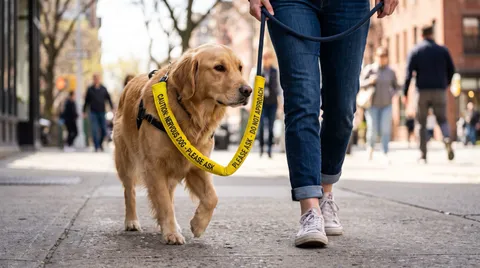
If you’re considering a muzzle for your reactive dog, you might also be carrying some embarrassment about it — like it says something bad about your dog, or about you as an owner. It doesn’t. A muzzle is a safety management tool, the same category as a seatbelt or a helmet — something you put on a capable, good dog to manage risk in specific situations, not a punishment or a label, and Fear Free Pets frames gradual, positive muzzle conditioning the same way: a life-saving management skill worth teaching every dog, not a last resort. Plenty of well-trained, well-loved dogs wear one. Here’s how to introduce it so your dog actually feels okay wearing it, not just tolerates it.
A muzzle is a safety management tool, the same category as a seatbelt or a helmet.
Why a basket muzzle, specifically
There are two broad categories of muzzle, and only one belongs in reactive dog training:
- Basket muzzles are open, cage-like designs that allow full panting, drinking, and treats through the front openings. Your dog can pant to cool down, drink water on a long walk, and take treats during training — all essential if the muzzle is going to be worn for more than a few minutes at a time.
- Slip or grooming muzzles hold the mouth shut entirely. These are meant for brief restraint — a vet exam, a nail trim — not for wearing during a walk. A dog can’t pant or cool down in one, which makes it unsafe for extended wear, especially in warm weather.
Everything in this guide assumes a properly fitted basket muzzle.
The two-stage process
Muzzle conditioning has two distinct comfort milestones, and they should be built one at a time, not together:
- Comfort with the nose going into the muzzle voluntarily. Your dog chooses to put their face in because good things happen there — no strap involved yet.
- Comfort with the strap around the head. Only introduced once stage one is solid.
Trying to do both at once — muzzle plus strap, right away — is the most common reason muzzle training goes badly. It turns a novel object into a trap the first time your dog wears it, which can undo weeks of progress in a single session.
Step-by-step: stage one
- Let your dog investigate the muzzle with no pressure. Set it on the floor or hold it loosely and let your dog sniff it at their own pace. No forcing their face toward it.
- Drop treats inside the muzzle basket. Hold it steady (not strapped) and let your dog choose to put their nose in to get the treats. If they hesitate, that’s fine — put a treat just at the opening instead, and let them get comfortable approaching before asking for more.
- Mark and reward every voluntary nose-in. Praise warmly and keep the treats coming while their nose is in the muzzle.
- Keep sessions short — one to two minutes, a few times a week. This isn’t a one-sitting project. Short, frequent, low-pressure sessions build a much more durable comfort than one long session.
- Only move to stage two once your dog is reliably and confidently pushing their nose into the muzzle on their own, without hesitation, across multiple sessions.
Step-by-step: stage two — adding the strap
- Buckle the strap loosely, for a second or two, while your dog’s nose is in the muzzle getting treats. Unbuckle before they have a chance to get uncomfortable — you’re ending the session on their terms, not waiting for them to ask.
- Gradually extend the buckled time, always paired with treats and calm praise, session by session.
- Once your dog is relaxed with the strap buckled for a minute or two at home, start adding light movement — a few steps around the room, still with treats and praise.
Building up to real-world wear
Once your dog is calm and relaxed wearing the muzzle at home, progress outward gradually:
- Start with short walks in low-traffic areas — a quiet street, an empty parking lot — where the muzzle is the only new variable, not muzzle-plus-crowds-plus-triggers all at once.
- Build wear-time gradually toward 30-plus minutes, extending duration only once your dog is relaxed at the current length.
- Bring high-value treats on every early muzzle walk, so wearing it continues to be associated with good things happening, not just “the thing before something stressful.”
Realistic timeline
This can take anywhere from a few days to several weeks, depending on the individual dog — their prior experiences, general confidence, and how they respond to novel objects near their face. Don’t rush it, and don’t force the muzzle on if your dog is resisting. A muzzle put on by force, even once, can set training back further than a slow start ever would. If your dog isn’t progressing through a stage after a couple of weeks of consistent short sessions, that’s a sign to bring in a trainer for a look at your specific technique, not to push harder.
Don’t only use it during stressful situations
This is an easy mistake to make: if the muzzle only ever comes out right before a vet visit or a walk you’re worried about, your dog will start associating the muzzle itself with stress, even after solid conditioning. Build in some neutral or genuinely positive muzzle-wearing time too — a relaxed walk, a low-key training session, wearing it briefly at home with treats — so the muzzle isn’t a predictor that something hard is about to happen.
Not a standalone fix
A muzzle manages risk during a moment — it doesn’t change why a dog might bite or lunge in the first place. For dogs with an actual bite history, muzzle conditioning is usually done alongside professional behavior modification work with a certified trainer or veterinary behaviorist, not as a substitute for it. Think of it the way you’d think of a well-fitted harness: it’s a management tool that buys safety and control while the real training work happens elsewhere.
A note on affiliate links
This page pairs naturally with a specific basket muzzle recommendation via Amazon Associates once the site’s privacy policy and affiliate disclosure page are live. The disclosure page is now live — adding the real link is just a manual step once the Amazon Associates account is set up.
When to bring in a professional
If your dog has an actual bite history, if muzzle conditioning triggers a stronger stress response than expected, or if you’re not confident reading your dog’s comfort level during the process, work with a certified force-free trainer or veterinary behaviorist in person. Getting muzzle conditioning wrong — rushing it or forcing it — can create a harder problem than the one you started with, so it’s worth getting hands-on guidance if anything about the process feels uncertain.
Related reading
Muzzle conditioning uses the same underlying skill as finding your dog’s threshold distance — working at the point where your dog can still think and take treats, not past it. If a muzzle is part of a vet-visit safety plan, see taking a reactive dog to the vet.