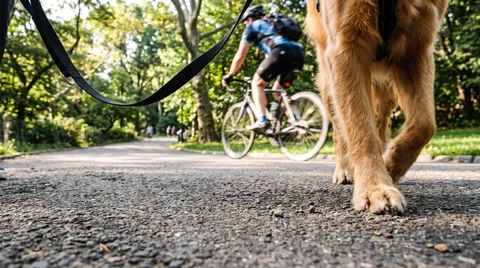
If your dog reacts to strangers approaching — on the sidewalk, at the door, reaching down to pet — the most important skill isn’t managing the reaction after it starts. It’s advocacy: preventing the unwanted approach from happening in the first place. Most strangers mean well and have no idea their approach is stressful for your dog. Learning to speak up, calmly and without guilt, changes far more walks than any single training drill.
Advocacy is the core skill, not an afterthought
A lot of reactivity advice focuses on what to do once your dog is already reacting — the U-turn, the treat magnet, the calm redirect. Those matter, but they’re damage control. The bigger lever is preventing the trigger from getting close enough to matter in the first place, which means the handler’s job includes actively managing other people, not just the dog. This is a mindset shift as much as a skill: you are allowed, and expected, to intervene on your dog’s behalf before a stranger gets close, not just react once they have.
Scripts for strangers who approach
Having a few calm, firm phrases ready — rehearsed enough that they come out automatically — makes a real difference in the moment:
- “She’s in training, please don’t approach.”
- “He needs space, thank you.”
- “Not today, sorry — we’re working on something.”
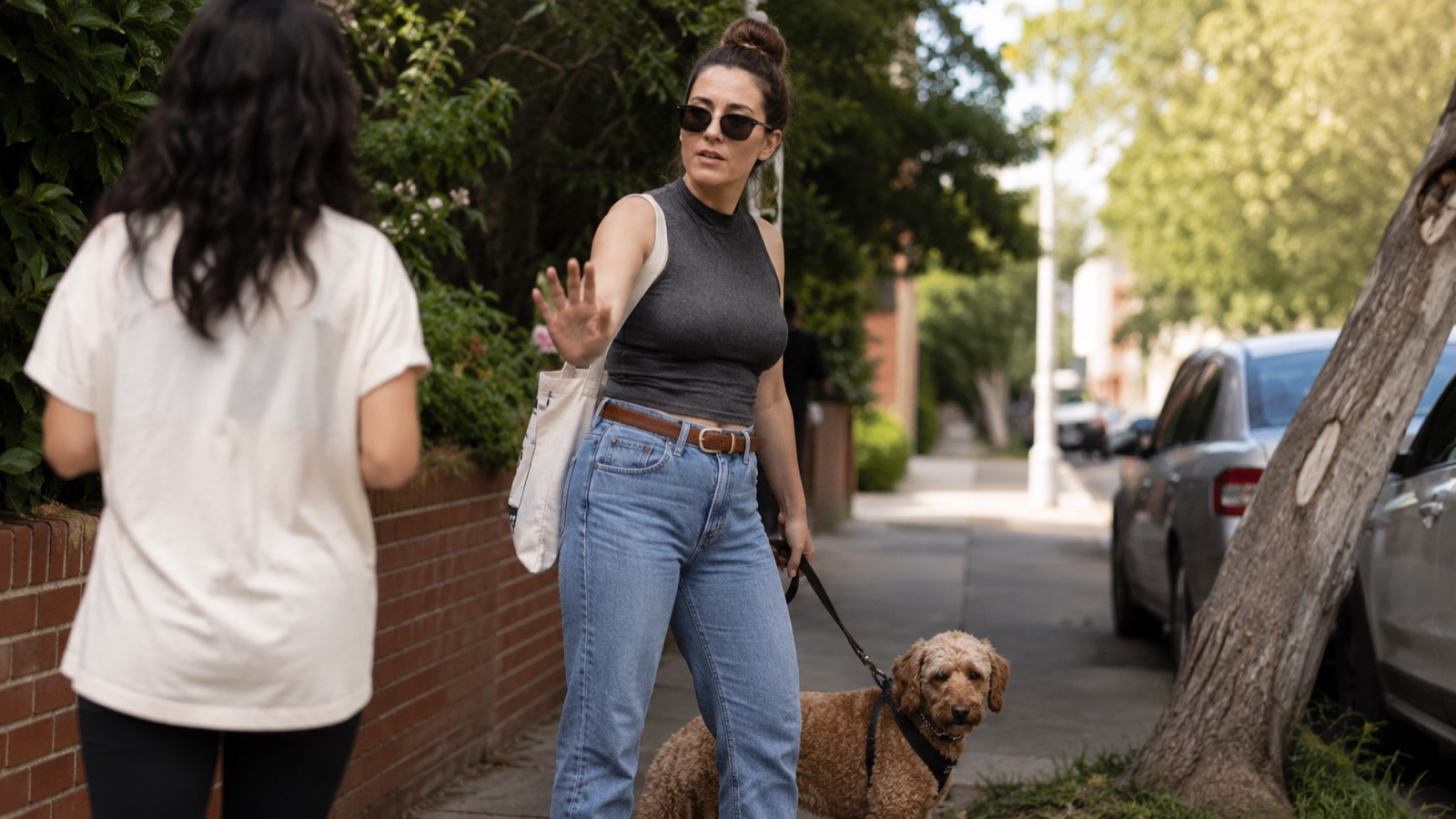
Say these clearly, at a normal volume, before the person gets close enough for your dog to react. Most people respond well to a simple, unapologetic request — the discomfort of saying it out loud fades quickly with practice. You don’t owe anyone a lengthy explanation of your dog’s behavioral history to justify asking for space; a short, calm phrase is enough, and normalizing that for yourself is part of the skill.
Body-blocking
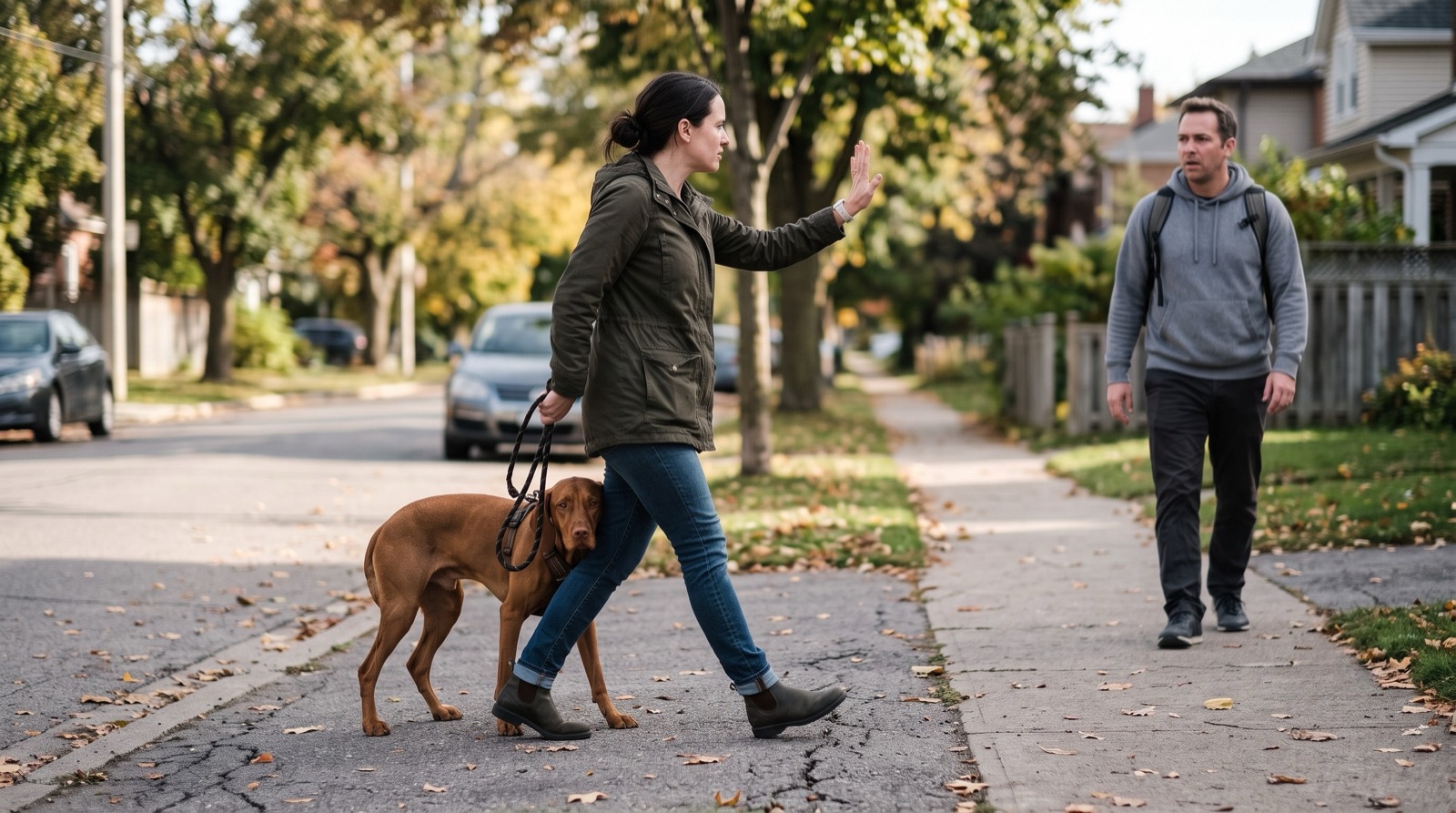
If a stranger doesn’t take the verbal cue, or approaches before you can say anything, position your body between your dog and the person as you create distance — angling yourself into the gap rather than just pulling the leash. This does two things: it gives your dog a physical buffer, and it makes your intent obvious to the approaching person without needing more words. Practice this at home with a family member walking toward you, so the movement feels automatic rather than something you’re improvising under pressure.
A visual shortcut: yellow gear
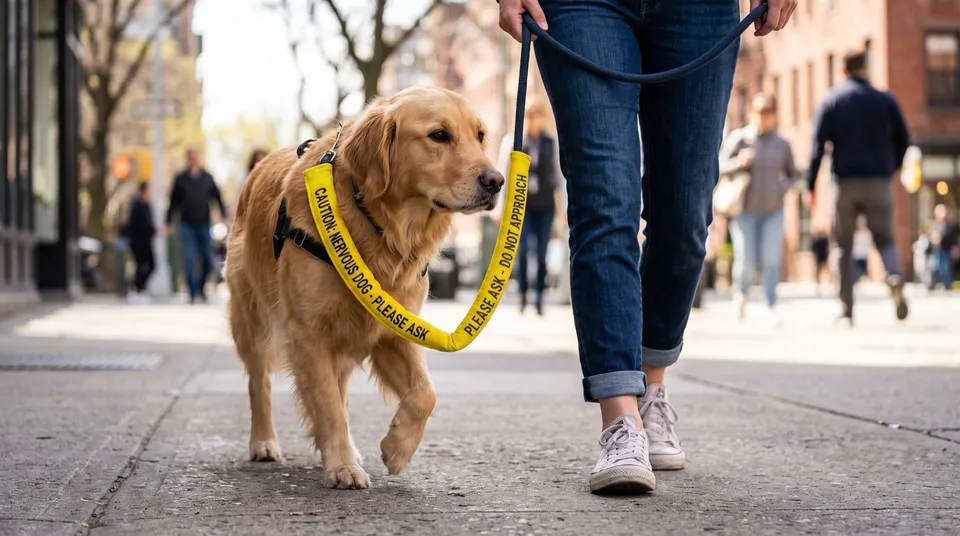
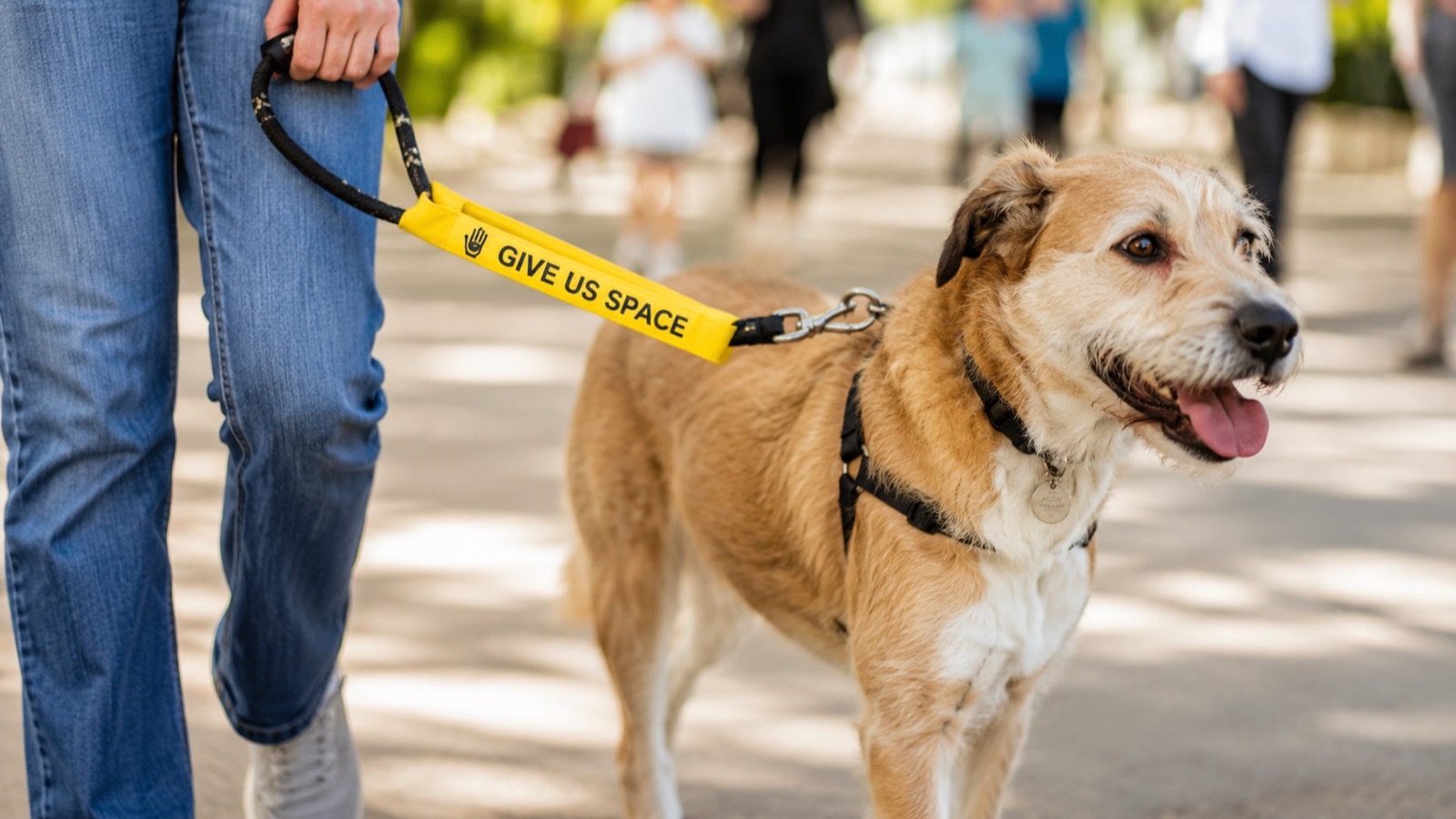
A leash sleeve, bandana, or vest in yellow is a widely recognized “give me space” signal among dog owners, associated with the Yellow Dog Project awareness campaign. It won’t be understood by everyone, but among people familiar with it, yellow gear can preempt the conversation entirely — some strangers will keep their distance on sight, without you needing to say anything. It’s a low-effort addition worth considering alongside the verbal scripts above, not a replacement for them, since plenty of people still won’t recognize it.
Counter-conditioning for a strangers trigger
Alongside advocacy and management, you can work directly on how your dog feels about strangers appearing at a distance:
- At a distance where your dog notices a stranger but stays under threshold — see finding your dog’s threshold distance for the full method — pair the stranger’s appearance with something genuinely good: high-value treats, a favorite toy, real enthusiasm from you.
- The goal is building a specific association over time: stranger appearing predicts good things happening, rather than stranger appearing predicting anxiety or a reaction.
- This is slow, incremental work, and it runs alongside advocacy and management, not instead of it — even as the underlying association improves, you still want to prevent unwanted close approaches in the meantime.
A note on where this comes from
Reactivity toward strangers is often, though not always, rooted in past experience or under-socialization during a dog’s developmental window, per the AVSAB Position Statement on Puppy Socialization. This is worth knowing as context, not something to dwell on: for adopted or rescue dogs especially, the actual originating cause frequently can’t be known, and knowing it isn’t necessary to help the dog in front of you now. The advocacy, management, and counter-conditioning above work regardless of why the pattern started.
When to bring in a professional
If your dog has any bite history, or if reactivity toward strangers is escalating rather than gradually improving with consistent management, that’s the point to bring in a certified force-free trainer or veterinary behaviorist in person. Advocacy and distance management reduce risk in the meantime, but they’re not a substitute for professional guidance once a dog’s reactivity is trending in the wrong direction.
Related reading
Start with the complete reactivity guide for the broader framework, and see dog reactive to bikes and skateboards if fast-moving triggers are also part of the picture.