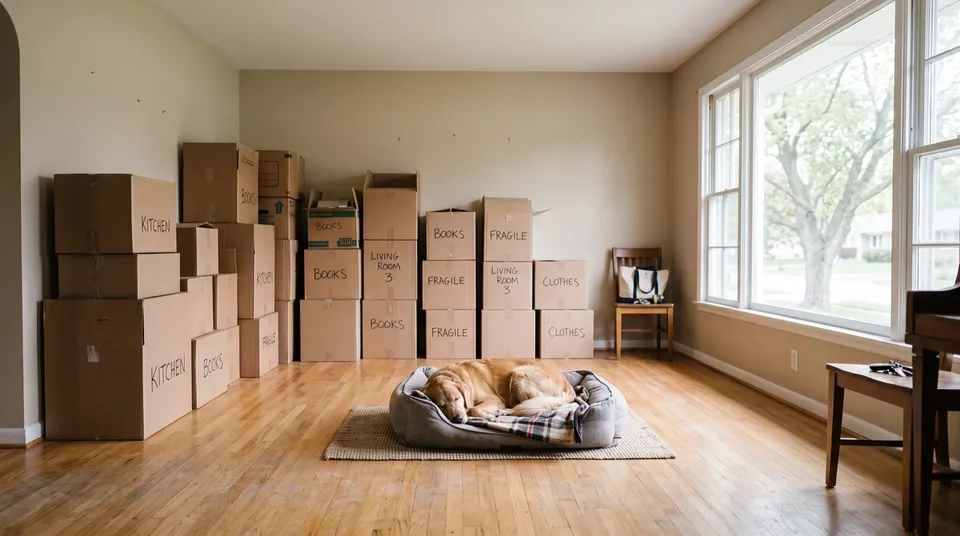
Moving is disruptive for any dog, but for a reactive dog specifically, it resets something your training has quietly depended on: familiarity with the environment. New sounds, new neighbors, new sightlines on walks, a new entryway or hallway layout — all the variables that shaped where your dog’s threshold sits reset at once, on the same day your household is at its most chaotic. Here’s how to manage that transition deliberately, rather than letting it happen to you.
Before the move: get your dog out of the chaos
If you have any option to do this, keep your dog somewhere calm — a trusted friend, family member, or daycare — during the actual physical move. Move day means open doors, strangers carrying furniture in and out, and a level of disorder that’s a genuine escape and stress risk for a dog who’s already prone to being overwhelmed. This isn’t about protecting your dog from mild inconvenience; a door propped open during a move is a realistic way for a stressed dog to bolt, and a reactive dog navigating strangers and unfamiliar equipment all day is being asked to cope with a lot at once for no real benefit. If boarding your dog elsewhere for moving day is possible, it’s worth prioritizing.
Pack their things last, unpack them first — and don’t wash them
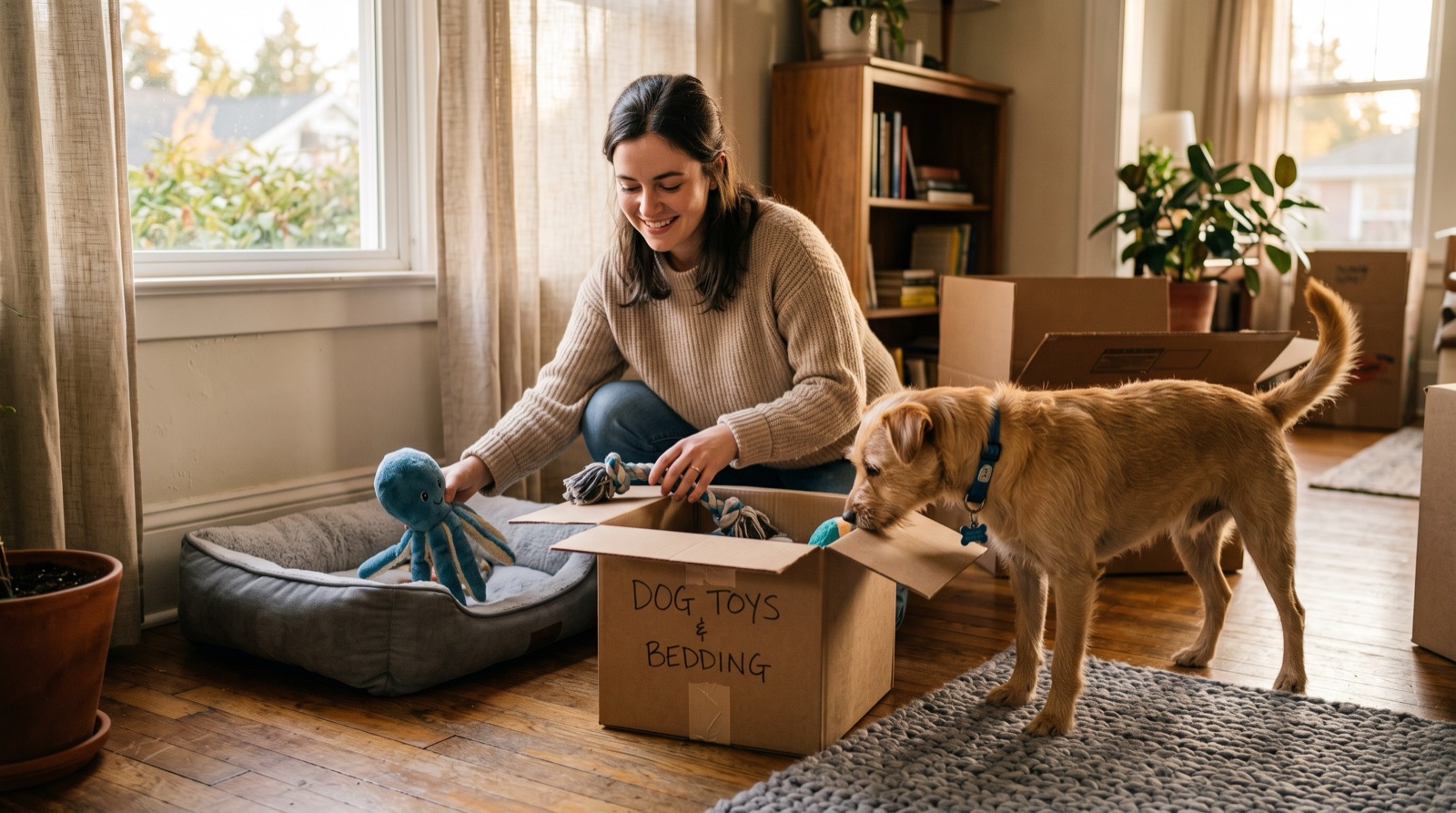
Your dog’s bed, blankets, and other familiar-smelling items should be the last things packed and the first things unpacked. Resist the instinct to wash everything for a “fresh start” in the new place — the familiar scent is doing real work here, giving your dog something recognizable and calming in an otherwise completely unfamiliar environment. A clean-smelling bed in a new house is a much weaker anchor than a bed that smells like home.
Introduce the new space one room at a time
Don’t let your dog loose to explore the entire new house or apartment all at once. Set up their crate, bed, and a few familiar items in one designated room first, and let that be their base. Gradually open up access to the rest of the space over the following days, rather than all at once — this mirrors the same logic behind threshold-based training elsewhere on this site: manageable exposure in stages, not everything at once because it’s logistically easier for you in the moment. The AVSAB Position Statement on Humane Dog Training makes this same point about any major environmental change: staged exposure reduces stress more reliably than flooding a dog with everything new at once.
Maintain routine as consistently as you possibly can
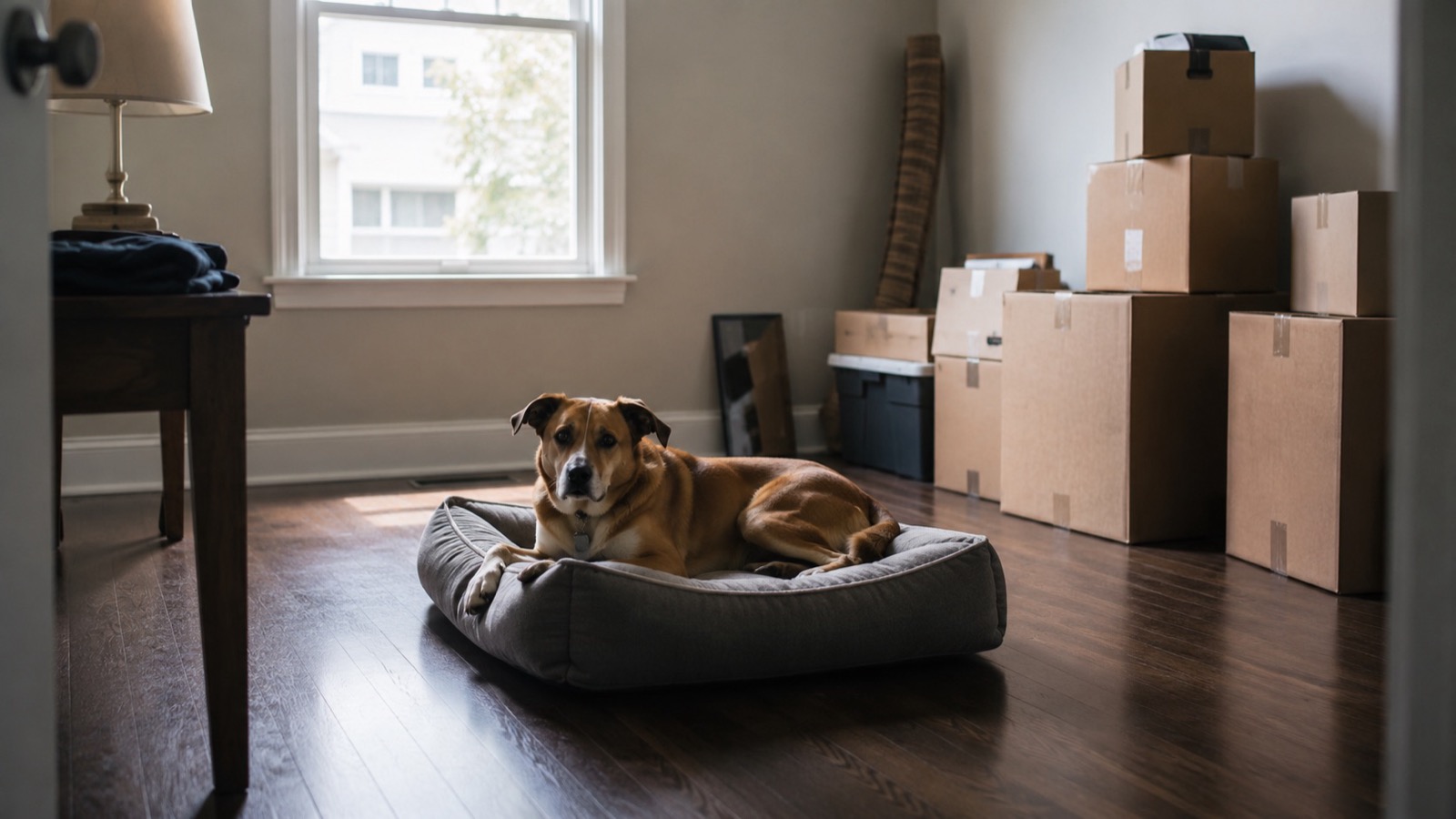
Amid the chaos of a move, walk times and meal times are often the first things to slide — understandably, since everything else is in flux. But consistency in routine is the single biggest lever you have for keeping your dog’s baseline stress lower during any major transition, moving included. A dog who’s uncertain about everything else in their environment benefits enormously from knowing that breakfast, walks, and bedtime are still happening on the schedule they recognize. Protect the routine even if you have to let other moving-day priorities slip.
If you’re changing between a house and an apartment
If this move also means a shift from a house to an apartment, or the reverse, there’s a second layer of adjustment on top of the move itself: hallway encounters, elevators, and shared entryways are a completely different set of dynamics than a private yard or a quiet suburban street, and vice versa. See reactive dog training in an apartment for hallway-specific protocols if you’re moving into a building with shared spaces — worth reading before moving day, not after the first surprise hallway encounter.
A realistic timeline
Most dogs need two to three weeks to genuinely settle into a new home — adjusting to new sounds, a new layout, and a new outdoor environment. Some setback in behavior during that window is normal and not a sign anything’s gone wrong. What’s worth paying attention to is the trend: if stress signs are escalating rather than gradually improving past the two-to-three-week mark, or if you see new separation anxiety, house-training regression, or a refusal to eat, that’s a signal to bring in professional support, not just a sign to “give it more time.” Those specific symptoms — appetite loss especially — are a meaningfully different situation from ordinary adjustment stress, and waiting them out can let a real problem become established rather than resolve on its own.
When to bring in a professional
If your dog’s stress signals aren’t improving after a few weeks in the new home, or you notice the escalating pattern described above, work with a certified force-free trainer or veterinary behaviorist rather than assuming more time alone will fix it. A move is a major life transition, and for some dogs it surfaces stress that needs more than routine and patience to resolve.
Related reading
If your new home doesn’t have a private yard, see no-yard training strategies for how to find workable outdoor practice space. For gear that travels well between homes, see the harness guide.