Some breeds show up in reactivity discussions far more often than others, and there’s a real reason for that — but it’s worth being precise about what that reason actually means. Breed predisposition lowers the probability of reactivity showing up; it doesn’t determine it. A well-socialized dog from a breed known for reactivity can be perfectly calm and easygoing, and a poorly socialized dog from almost any breed, including ones with a reputation for being laid-back, can become genuinely reactive. This page is a map of the tendencies, not a diagnosis based on breed alone.
Herding breeds: bred for sensitivity to movement
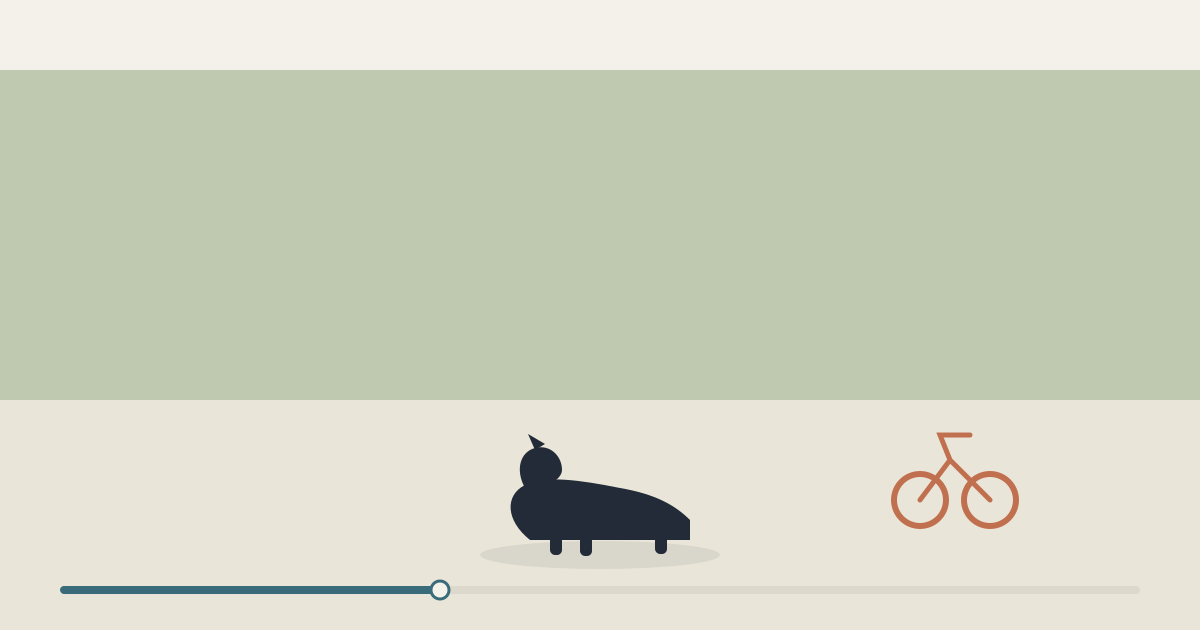
Border Collies, Australian Shepherds, and similar herding breeds were selected over generations for an intense, specific sensitivity to movement — tracking, fixating on, and responding to the smallest shift in a moving target. Dropped into a suburban or city environment, that same sensitivity often fires on bikes, joggers, cars, and other dogs running, producing a pattern that can look like or escalate into reactivity. Under-exercised, under-stimulated dogs of these breeds are especially prone to this, because the underlying herding drive has nowhere structured to go. See the full breakdown for herding breeds if this matches your dog.
Guard and protective breeds: bred for alertness to strangers
German Shepherds, Rottweilers, and other breeds developed for guarding or protection work were selected for quick, decisive responses to unfamiliar people — noticing strangers early and treating them with appropriate suspicion until proven safe. In a city or suburban setting, this shows up as protective or territorial arousal toward strangers, which looks and behaves differently from dog-to-dog leash reactivity: it’s often triggered by someone entering the dog’s perceived space rather than by another dog on a walk, and it can be a genuinely functional trait at low intensity rather than purely a problem to eliminate. See the full breakdown for German Shepherds for how to tell normal alertness apart from something that needs intervention.
Terriers and hunting breeds: prey drive presenting as reactivity
Terriers, sighthounds, and many hunting breeds carry a strong prey drive that can look a lot like reactivity when it’s triggered by small or fast-moving targets — squirrels, cats, small dogs, anything that moves quickly and unpredictably at ground level. The mechanism here is different from fear or protective instinct: it’s closer to a chase response than an emotional reaction to threat, which matters for how you train it. A dog fixating hard on a small dog out of prey drive needs a different read than a dog barking at a large dog out of fear, even though both can look like “reactivity” from a distance.
Small breeds: less genetics, more pattern
Chihuahuas and other small breeds show up constantly in reactivity conversations, but the driving factor here is less about inherited temperament and more about a common pattern in how small dogs get raised: because picking a small dog up or moving them away from a trigger is so physically easy, small dogs are frequently under-socialized, missing out on the repeated coping practice that shapes a calmer adult dog. The underlying emotional experience of a reactive small dog is identical to a reactive large dog’s — it’s the socialization pattern, not the genetics, doing most of the work here. See the full piece on small dog reactivity for the honest version of how this happens and what to do about it.
What breed tendency doesn’t tell you
None of the categories above are a sentence. A Border Collie raised with structured outlets and careful exposure to movement triggers can be a calm, confident adult. A Golden Retriever or Labrador — breeds with a general reputation for easygoing temperaments — can become seriously reactive with a rough start, a bad genetic draw, or a lack of socialization during the right developmental window. Breed gives you a reasonable prior on what to watch for and plan around; it doesn’t replace actually observing your individual dog.
The training approach doesn’t change
Whatever your dog’s breed tendency, the underlying method is the same across every post on this site: find and work at your dog’s threshold distance, manage exposure so your dog isn’t constantly rehearsing the reactive pattern, and bring in a certified force-free trainer or veterinary behaviorist when things are escalating, there’s a bite history, or you feel unsafe. Breed context helps you understand why your dog’s reactivity looks the way it does and what triggers to expect — it doesn’t change the fundamentals of how you actually address it. Start with the complete reactivity guide if you haven’t already, since everything breed-specific on this site builds on that foundation.